
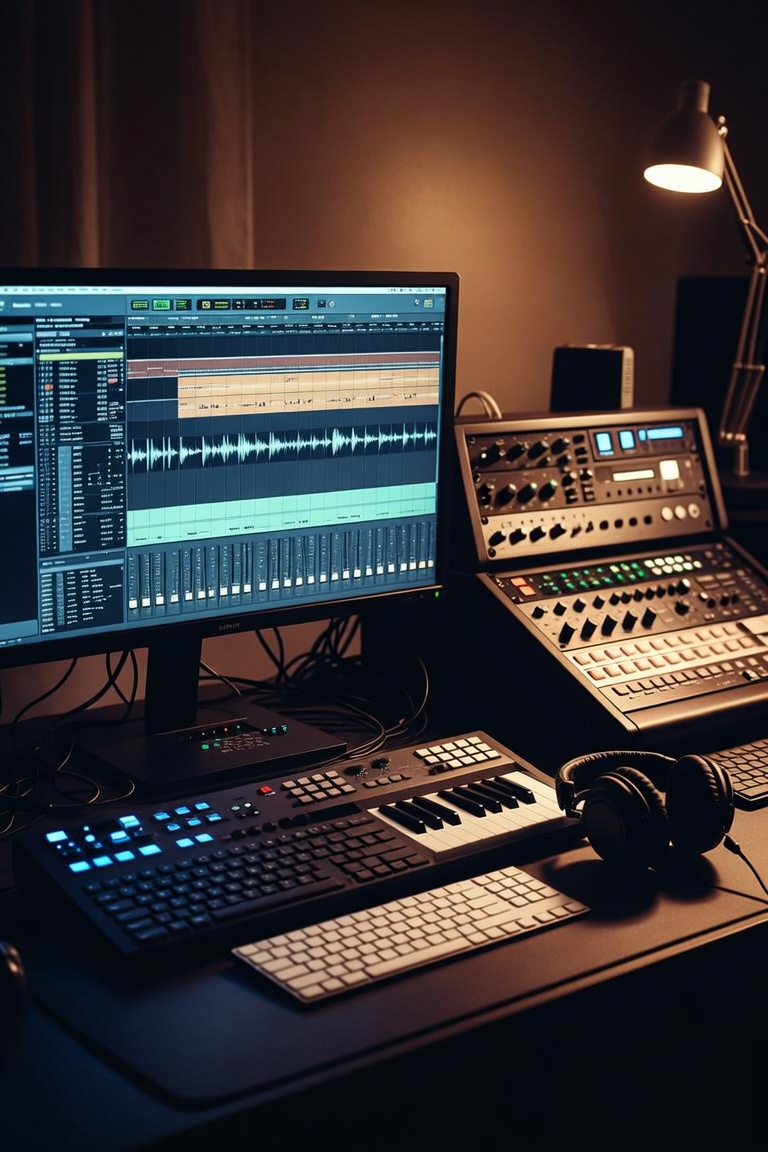
Trap beat production is one of the most important skills for modern producers, beatmakers and artists. A strong trap beat can carry a song before the vocal even starts. It creates mood, rhythm, attitude and energy. But making a professional trap beat is not just about adding fast hi-hats and a loud 808. It is about sound selection, groove, arrangement, low end, space and mixing decisions.
Many beginners start by downloading drum kits, opening a DAW and creating an eight-bar loop. That is a good start, but it is not enough to create beats that sound professional. A real trap beat needs movement. It needs sections. It needs room for the artist. It needs drums that hit hard without destroying the mix.
That is why learning trap beat production through a structured music production course [LINK: https://themusicproducerschool.com/courses/] can make a huge difference. Instead of guessing, producers learn how to build beats with intention from the first idea to the final export.
At The Music Producer School [LINK: https://themusicproducerschool.com/], the goal is to help producers understand the full process behind professional music production. Whether you produce trap, hip hop, pop, EDM or electronic music, the foundation is always the same: workflow, sound selection, arrangement, mixing and finishing music.
What Is Trap Beat Production?
Trap beat production is the process of creating instrumental tracks inspired by trap and hip hop music. These beats usually include heavy 808s, punchy drums, sharp snares or claps, fast hi-hat patterns, dark melodies, atmospheric textures and strong rhythmic bounce.
Trap music often uses space as much as sound. A good trap beat does not need to be crowded. In fact, many professional beats are powerful because they leave room for the vocal. The producer needs to know when to add elements and when to keep the arrangement simple.
A trap beat can be dark, emotional, aggressive, melodic, minimal, cinematic or experimental. The style can change, but the core elements remain important: drums, 808, melody, arrangement and mix.
A strong trap beat production workflow helps producers create beats that feel complete, not just loops that repeat for three minutes.
Why Sound Selection Is So Important
Sound selection is one of the biggest differences between amateur and professional trap beats. The right kick, snare, clap, hi-hat and 808 can make a simple idea sound powerful. The wrong sounds can make even a good melody feel weak.
Many beginners try to fix bad sound selection with too many plugins. But if the original sound does not fit the beat, mixing becomes much harder. A weak kick will not suddenly become professional because of compression. A bad 808 will not automatically sound clean because of EQ. A thin snare may never hit correctly if it does not have the right character.
Professional producers choose sounds that already work together. The kick supports the 808. The snare cuts through the mix. The hi-hats create movement. The melody leaves space. The effects support the mood.
This is why sample packs and producer tools [LINK: https://themusicproducerschool.com/shop/] can be useful when used correctly. Good sounds can speed up the creative process, but the producer still needs to make smart decisions.
The Role of the 808 in Trap Beats
The 808 is one of the most important elements in trap beat production. It is not only a bass sound. It often works as a bassline, rhythm instrument and emotional foundation at the same time.
A good 808 needs to be tuned correctly. If the 808 is out of key, the entire beat can feel wrong, even if the drums are strong. Producers should understand the key of the beat and make sure the 808 notes support the melody.
The rhythm of the 808 is also important. It can follow the kick, answer the melody or create its own movement. Slides, glides, note length and pauses can completely change the bounce of the beat.
Mixing the 808 requires control. Too much low end can make the beat muddy. Too much distortion can make it harsh. If the 808 and kick fight each other, the beat loses impact. A good trap beat production course should teach producers how to make the 808 powerful without destroying the rest of the mix.
Kick and 808: How They Work Together
The relationship between the kick and 808 is essential in trap production. These two elements often share the same low-frequency space, so they need to be arranged and mixed carefully.
Some trap beats use a kick that hits with the 808. Other beats use the 808 almost like the main low-end impact. The producer needs to decide which element is leading the low end.
If the kick and 808 hit at the same time, they need to complement each other. The kick may provide the transient and punch, while the 808 provides weight and sustain. If they are not balanced, the low end can become messy.
EQ, volume balance, tuning, saturation and sidechain can all help, but the best solution starts with choosing sounds that work together. If the kick and 808 already fit, the mix becomes much easier.
Professional trap production is not about making the low end as loud as possible. It is about making the low end feel strong, clean and controlled.
Creating Trap Drum Patterns
Trap drums are all about rhythm and bounce. The basic elements usually include kick, snare or clap, hi-hats, open hats, percussion and sometimes rimshots, snaps or effects.
The snare or clap usually lands on strong backbeats, giving the beat its structure. The kick creates movement and interacts with the 808. Hi-hats create speed, energy and bounce.
Fast hi-hats are a classic trap element, but they should not be used randomly. Rolls, triplets, pitch changes, velocity variation and pauses can make the pattern more interesting. Without variation, hi-hats can sound robotic and repetitive.
Velocity is extremely important. Not every hi-hat should hit with the same strength. Small changes in velocity create groove and make the beat feel more alive.
A good beat making course should teach rhythm as a musical language. Drums are not only sounds on a grid. They create the physical feeling of the beat.
Melodies and Mood in Trap Production
Trap melodies often create the emotional identity of the beat. They can be dark, sad, luxurious, aggressive, dreamy, cinematic or mysterious. The mood of the melody influences how the artist will perform on the track.
Common trap melody sounds include bells, pianos, guitars, flutes, pads, synths, strings, vocal chops and atmospheric textures. But the sound alone is not enough. The melody needs space, repetition and identity.
Many strong trap melodies are simple. A short phrase with the right sound and rhythm can be more effective than a complex musical part. The key is creating something memorable without crowding the beat.
Chords can also shape emotion. Minor chords often create darker moods, while more colorful progressions can create emotional or cinematic feelings. Counter-melodies can add movement, but they should not compete with the main idea.
A professional trap producer knows when the melody is enough. Sometimes removing notes makes the beat stronger.
Arrangement: Turning a Loop Into a Full Beat
One of the most common problems in trap beat production is loop addiction. A producer creates a strong eight-bar idea but does not know how to turn it into a complete beat.
Arrangement is what makes the beat usable for an artist. A full trap beat usually includes an intro, hook, verse, second hook, second verse, bridge or outro. The exact structure can change, but the beat needs movement.
The artist needs space to perform. If every section has all the instruments playing all the time, the beat can feel crowded. A good arrangement removes and adds elements to create contrast.
For example, the intro may start with only the melody. The hook may bring in full drums and 808. The verse may remove some elements to leave space for vocals. The second hook may add a counter-melody or extra percussion to increase energy.
A strong arrangement makes the beat feel like a song, not just a loop.
Leaving Space for Vocals
Trap beats are often created for rappers, singers or vocalists. That means the producer needs to leave space in the instrumental.
A common beginner mistake is adding too many melodies, effects and drum fills. The beat may sound impressive alone, but once the artist records vocals, everything becomes crowded.
Professional beatmakers understand that the vocal is usually the main focus. The beat should inspire the artist, but it should not fight the artist.
Leaving space can mean using fewer melodic layers, simplifying drums during verses, controlling reverb, avoiding too much high-frequency clutter and making sure the main melody does not occupy the same space as the vocal.
If the beat is meant for an artist, the arrangement should support the vocal performance. This is one of the reasons trap production is both creative and strategic.
Mixing Trap Beats
Mixing trap beats requires impact, clarity and low-end control. The drums need to hit hard. The 808 needs to feel powerful. The melody needs to create mood. The full beat needs to sound clean enough for vocals.
The first step is volume balance. Before using plugins, the kick, 808, snare, hi-hats and melody need to sit at the right levels.
EQ helps create space. You may need to remove unnecessary low end from melodies so the 808 has room. You may need to control harsh frequencies in hi-hats or brighten the snare so it cuts through.
Saturation and distortion can help the 808 translate on smaller speakers. This is important because deep bass may not be heard clearly on phones or laptop speakers. Harmonic distortion can make the 808 more audible without only increasing volume.
Compression may be useful on drums or melodies, but it should be used with purpose. Not every sound needs compression. Sometimes the right sample and volume balance are enough.
A good mix makes the beat feel powerful without becoming messy.
Mastering Beats for Presentation
Many beatmakers export beats to send to artists, upload to beat stores, share on social media or release as instrumentals. This means the beat needs to be presented well.
Mastering a beat is not the same as mastering a full song with vocals, but the idea is similar. The goal is to control the final level, make the beat feel balanced and avoid distortion.
A beat should be loud enough to feel exciting but not so crushed that there is no room for vocals later. If the beat is going to an artist for recording, it is often smart to keep a version with enough headroom.
Professional beatmakers often export different versions: a tagged preview, an untagged WAV, stems or trackouts, and sometimes a version with more headroom for recording.
A complete online music production course [LINK: https://themusicproducerschool.com/produto/online-music-production-course/] can help producers understand not only how to create beats, but how to prepare them for real-world use.
Trap Production in Different DAWs
Trap beats can be produced in many DAWs, including FL Studio, Ableton Live, Logic Pro, Studio One, Pro Tools and Fender Studio Pro. Each software has a different workflow, but the production principles remain the same.
FL Studio is popular for trap because of its fast pattern-based workflow. Ableton Live is great for audio manipulation, loops, sampling and creative arrangement. Logic Pro is strong for recording, MIDI, songwriting and full production. Studio One and Fender Studio Pro can also support modern beat-making workflows.
The DAW does not make the beat professional by itself. The producer does. A great producer understands rhythm, sound selection, low end, arrangement and mixing.
If you want to develop electronic music and beat-making skills inside Ableton, you can also explore the Ableton Live course [LINK: https://themusicproducerschool.com/produto/ableton-live-12-edm-course/].
Trap Beat Production for Beginners
Trap beat production is a great starting point for beginners because it teaches many important music production skills. You learn drums, bass, melody, arrangement, sound selection and mixing in a practical way.
Beginners should start simple. Create a melody. Add drums. Tune the 808. Build a basic arrangement. Mix the main elements. Export the beat. Then repeat the process.
The goal is not to make a perfect beat on the first try. The goal is to build skill through repetition. Every beat teaches something.
A beginner should avoid getting trapped in endless plugin searches. The most important tools are already inside most DAWs. What matters is learning how to use them.
Structure is important. Without a clear path, beginners often create random loops but never develop a professional workflow.
Trap Beat Production for Intermediate Producers
Intermediate producers often already know how to create beats, but they may struggle with making them sound professional. The drums may not hit hard enough. The 808 may be muddy. The melody may be too repetitive. The mix may not translate well.
At this level, the producer needs to improve details. Better sound selection, stronger arrangement, cleaner low end, more space for vocals and better mixing decisions can make a huge difference.
Intermediate producers should also study reference tracks. Listening to professional trap beats helps you understand drum levels, 808 balance, melody space, vocal room and overall loudness.
Feedback is also valuable. Sometimes you cannot hear the problem in your own beat because you have been listening to it for too long. A structured course or mentor can help identify weaknesses faster.
Using Samples Without Sounding Generic
Samples are common in trap production. Producers use loops, drum one-shots, melodic phrases, vocal chops and textures to build ideas quickly.
But using samples does not mean copying. The producer can transform samples by chopping, pitching, reversing, stretching, layering and processing them. This creates a more original sound.
A sample can be the start of a beat, but the producer’s decisions turn it into a full production. Drum programming, 808 movement, arrangement, effects and mixing all shape the final result.
The key is making the sample feel like part of your sound, not just a loop placed on the timeline.
Why Workflow Matters in Beat Making
Workflow is the difference between making one beat occasionally and finishing beats consistently. A strong workflow helps you move from idea to export without losing focus.
This can include creating DAW templates, organizing drum kits, saving favorite sounds, building a folder of reference tracks and having a clear process for arrangement and mixing.
Many producers lose time because their sessions are disorganized. They spend more time searching for sounds than creating music. A better workflow helps you stay creative.
At The Music Producer School, the focus is always on practical music production. The goal is to help producers make better decisions and finish more music.
For more production guides, DAW tips and music creation strategies, visit the music production blog [LINK: https://themusicproducerschool.com/blog/].
Is Trap Beat Production Worth Learning?
Yes. Trap beat production is worth learning because it teaches essential skills that apply to many modern genres. Even if you later produce pop, EDM, hip hop, R&B or cinematic music, the skills you build through trap production remain useful.
You learn rhythm. You learn low end. You learn space. You learn arrangement. You learn how to support vocals. You learn how to create energy with fewer elements.
Trap production also helps producers understand modern music trends. Many pop, Latin, electronic and commercial tracks use trap-inspired drums, 808s and rhythmic ideas.
Learning trap beat production is not only about one genre. It is about understanding modern production language.
Learn Trap Beat Production With a Professional Workflow
Trap beat production can be simple to start, but difficult to master. The best beats are not always the most complicated. They are the ones with the right sounds, the right bounce, the right space and the right energy.
At The Music Producer School [LINK: https://themusicproducerschool.com/], producers learn how to build music with structure and intention. The goal is to help students move beyond random loops and create tracks that feel complete.
Whether you are a beginner beatmaker, an artist producing your own music or a producer trying to improve your sound, learning trap beat production can help you create stronger, cleaner and more professional beats.
If you want to improve your workflow, understand 808s, create better drums, build stronger arrangements and mix beats with more confidence, the online music production course [LINK: https://themusicproducerschool.com/produto/online-music-production-course/] can help you take the next step.
And if you are not sure which course fits your goals, you can contact The Music Producer School [LINK: https://themusicproducerschool.com/contact/] and discover the best path for your music production journey.