
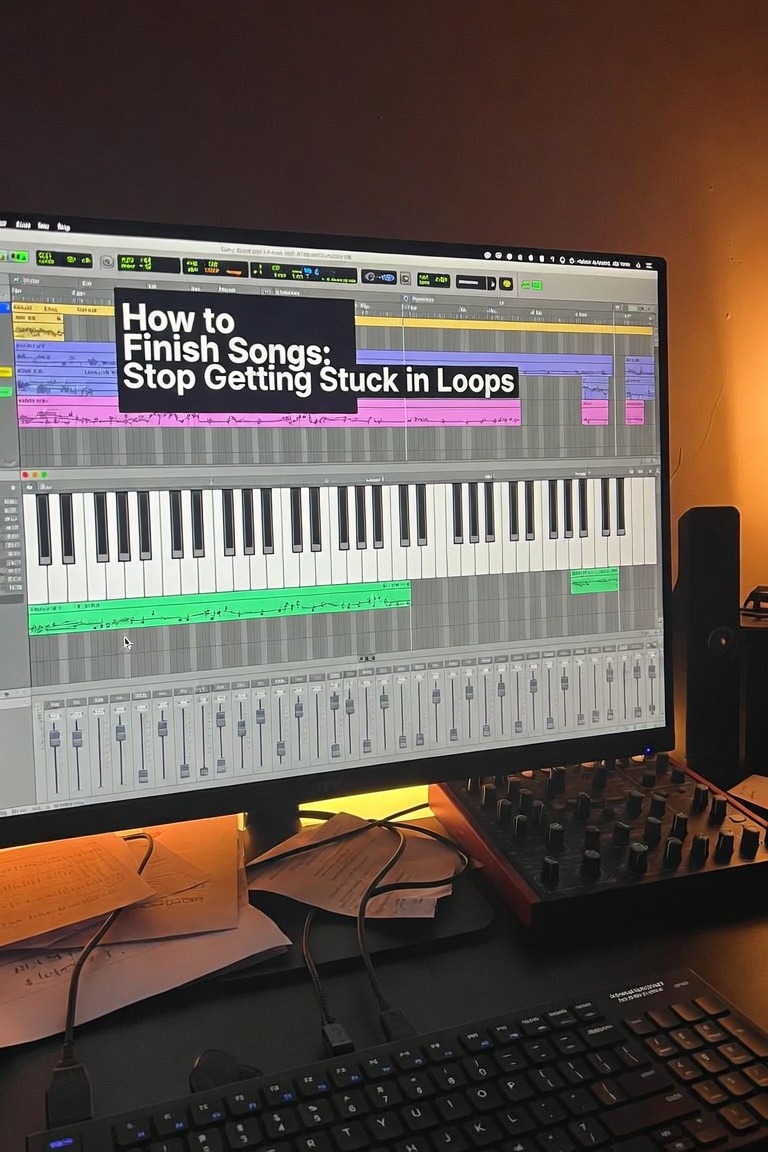
One of the biggest challenges in music production is not starting a track. It is finishing it. Many producers have folders full of unfinished projects, eight-bar loops, beat ideas, drops, melodies, vocal demos and rough sessions that never become complete songs.
The problem is not always lack of talent. In many cases, the problem is lack of workflow. A producer may know how to create a good idea, but not how to develop it into a full arrangement, mix it properly and prepare it for release.
Learning how to finish songs is one of the most important skills a producer can develop. It builds confidence, improves decision-making and helps you grow faster with every completed project.
At The Music Producer School [LINK: https://themusicproducerschool.com/], the focus is not only on creating ideas. The goal is to help producers build a complete music production process, from the first sound to the final export.
A structured online music production course [LINK: https://themusicproducerschool.com/produto/online-music-production-course/] can help producers stop getting lost in loops and start finishing real tracks with more confidence.
Why Producers Struggle to Finish Songs
Many producers struggle to finish songs because the beginning is exciting and the middle is difficult. Starting a track feels creative. You choose sounds, build a groove, create a melody and feel inspired. But after the first loop is created, the real work begins.
Now you need to arrange the track. You need to create sections, transitions, energy changes, variation and movement. You need to decide what stays and what goes. You need to stop experimenting and start building.
This is where many producers get stuck. They keep adding sounds to the same loop instead of turning the idea into a full song. They open the project again and again, make small changes and never move forward.
Another reason producers do not finish songs is perfectionism. They want every sound to be perfect before the arrangement is finished. They spend hours mixing a hi-hat, changing a snare or testing plugins before the song even has a structure.
A finished song requires decisions. If you avoid decisions, the track stays unfinished.
The Loop Problem
The loop problem is extremely common. A producer creates an eight-bar idea that sounds good, but cannot turn it into a complete track.
Loops are useful because they help you create the core identity of the song. A loop may contain the main drums, bass, chords, melody or hook. But a loop is only the beginning.
A song needs a journey. It needs a start, development, contrast and ending. If the same loop repeats without direction, the listener gets bored quickly.
The solution is to stop treating the loop as the final product. Treat it as raw material. Once the loop feels strong, duplicate it across the timeline and start removing and adding elements to create sections.
You do not need to invent a completely new idea for every section. Sometimes arrangement is simply about changing energy. Remove the drums for the intro. Bring in the bass later. Add a new layer in the chorus. Take elements away in the verse. Use automation to build tension.
A loop becomes a song when it starts to move.
Start With a Rough Arrangement
One of the fastest ways to finish songs is to create a rough arrangement early. Do not wait until every sound is perfect.
A rough arrangement gives your track a full shape. It does not need to be final. It simply creates a beginning, middle and end.
For EDM, a rough arrangement may include intro, buildup, drop, breakdown, second buildup, second drop and outro. For trap or hip hop, it may include intro, hook, verse, hook, second verse and outro. For pop, it may include verse, pre-chorus, chorus, second verse, bridge and final chorus. For soundtrack production, it may follow the emotional movement of a scene.
The rough arrangement helps you see what is missing. Maybe the intro is too long. Maybe the drop needs more impact. Maybe the chorus needs more layers. Maybe the second verse needs variation. Maybe the ending feels weak.
Without arrangement, you are guessing. With arrangement, you can make real decisions.
Use Reference Tracks
Reference tracks are one of the best tools for finishing music. A reference track is a professional song in a similar style that helps you understand structure, energy, arrangement and mix balance.
The goal is not to copy the reference. The goal is to study how professional tracks move.
Listen to when the drums enter. Notice when the bass starts. Pay attention to how long the intro lasts. Notice how the chorus or drop becomes bigger. Listen to transitions, effects, breakdowns and endings.
Reference tracks help you stop guessing. If you are producing EDM, study how EDM arrangements build tension and release. If you are producing trap, study how beats create space for vocals. If you are producing pop, study how the vocal and chorus are structured.
A professional track can teach you what your unfinished project needs.
For more guides about arrangement, DAWs, mixing and production workflow, visit the music production blog [LINK: https://themusicproducerschool.com/blog/].
Separate Production From Mixing
Many producers never finish songs because they mix too early. They start a track, add a few sounds and immediately begin EQing, compressing and testing mastering chains.
This slows down the creative process.
Mixing is important, but it should not replace arrangement. If the song is not built yet, you do not need to perfect every detail. You need to move the track forward.
A better workflow is to separate the stages:
Create the idea.
Build the arrangement.
Edit and clean the session.
Mix the track.
Master the final version.
These stages can overlap, but if you spend too much time mixing before the arrangement is finished, you may lose the creative energy of the song.
A rough mix is enough during production. Keep the track sounding good enough to inspire you, but do not get trapped in tiny mix decisions too early.
Stop Adding Too Many Sounds
Another reason songs stay unfinished is overproduction. When a track does not feel complete, many producers keep adding more sounds. More drums. More synths. More effects. More melodies. More layers.
Sometimes this helps, but often it makes the track worse.
A song may not need more elements. It may need better arrangement. It may need stronger contrast. It may need space. It may need one sound removed.
Professional production is not about filling every second. It is about choosing what matters.
If the track feels crowded, mute elements one by one. Ask yourself which sounds are truly helping the song. If a sound does not add groove, emotion, energy or identity, it may not belong.
Finishing music often requires subtraction, not addition.
Create Section Variations
A full song needs variation. This does not mean every section needs to be completely different. Small changes can be enough.
You can create variation by removing drums, changing the bass rhythm, adding a counter-melody, changing the hi-hat pattern, filtering a synth, adding vocal chops, automating reverb, changing percussion or adding transition effects.
In trap beats, the hook may use full drums and 808 while the verse removes some elements to leave space for vocals. In EDM, the buildup may slowly increase energy before the drop. In pop, the second chorus may add extra harmonies or percussion. In cinematic music, the arrangement may grow with strings, textures and percussion.
Variation keeps the listener engaged. It also helps the track feel intentional instead of repetitive.
Transitions Help Songs Feel Finished
Transitions are the glue between sections. Without transitions, a song can feel like separate blocks placed next to each other.
Transitions can be simple or complex. A drum fill, reverse cymbal, riser, impact, delay throw, reverb tail, filter automation, crash, sweep or short silence can help connect one section to another.
The best transitions support the energy of the song. A buildup needs tension. A drop needs impact. A verse may need space. A chorus may need lift.
Do not use transitions randomly. Use them to guide the listener.
A track starts to feel more professional when sections connect naturally.
Make Decisions Faster
Finishing songs requires decision-making. Many producers keep projects unfinished because they keep every option open.
They save ten snare options, five bass sounds, three chord progressions and twenty plugin chains. They keep testing and never commit.
At some point, you need to choose. Choose the kick. Choose the bass. Choose the arrangement. Choose the vocal take. Choose the direction.
Not every decision will be perfect. That is normal. The goal is to finish and learn. A finished song teaches you much more than an unfinished project with endless options.
Professional producers make decisions and move forward.
Use Deadlines
Deadlines help producers finish music. Without a deadline, a track can stay open forever.
A deadline creates focus. It forces you to make decisions and stop overthinking. You can set a personal deadline, a release deadline, a feedback deadline or a challenge deadline.
For example, decide that by Friday the arrangement must be finished. By Sunday the mix must be ready. By next week the track must be exported.
Deadlines do not mean rushing carelessly. They mean giving the project a real ending.
Finishing music is a habit. Deadlines help build that habit.
Work With Versions
One smart way to avoid fear is to save versions. Instead of being afraid to make changes, save a new version of the project.
For example:
Song Name – Arrangement 01
Song Name – Arrangement 02
Song Name – Mix 01
Song Name – Final Mix
Song Name – Master
This gives you freedom to move forward because you know you can return to an older version if needed.
Version control is part of professional workflow. It keeps your sessions organized and helps you avoid confusion.
Do not create endless versions forever, but use versions to support progress.
Get Feedback Before You Overwork the Track
Feedback can save a lot of time. Sometimes you cannot hear what is wrong because you have been listening to the same track for too long.
A fresh perspective can reveal the real problem quickly. Maybe the arrangement is too long. Maybe the drums are weak. Maybe the vocal is too quiet. Maybe the track needs fewer layers. Maybe the drop is not different enough from the buildup.
One-on-one feedback is especially powerful because it is based on your actual music, not generic advice.
A music production course [LINK: https://themusicproducerschool.com/courses/] or mentorship can help producers understand what their tracks need and how to finish them with more direction.
Finish the Arrangement Before the Final Mix
Before you do the final mix, make sure the arrangement is complete. The song should already feel like a full track.
The final mix should improve the track, not define it. If the arrangement is weak, mixing will not solve the core problem.
Ask yourself:
Does the track have a clear beginning?
Does the main section feel strong?
Is there enough variation?
Do the transitions work?
Does the energy move?
Is the ending clear?
Does the song feel complete before mixing?
If the answer is yes, move to the final mix.
Mix With a Clear Priority
When mixing, decide what the listener should focus on. Is it the vocal? The drop? The beat? The melody? The groove? The emotion?
A mix without priority feels confusing. Everything fights for attention.
For vocal music, the vocal usually needs to be clear and present. For EDM, the kick, bass and main hook often define the energy. For trap, the drums, 808 and melody need to leave space for the artist. For soundtrack music, the emotion and dynamics matter most.
Volume balance is the first step. EQ, compression, reverb, delay and automation come after.
A focused mix helps the song feel finished.
Do Not Master Too Early
Many producers add a limiter or mastering chain too early because it makes the track feel louder and more exciting. But this can create problems.
If you master too early, you may hide mix problems. The track may feel loud, but the low end could still be muddy, the vocal could still be buried or the arrangement could still be weak.
Mastering should be the final stage, not a shortcut.
Before mastering, make sure the mix is balanced. Make sure there is enough headroom. Make sure the song translates on different speakers.
A good master improves a strong mix. It does not rescue a broken production.
Export and Listen Away From the DAW
Sometimes you need to leave the DAW to hear the song honestly. Export the track and listen somewhere else.
Listen in the car, on headphones, on phone speakers or while walking. Do not touch the session immediately. Just listen like a normal listener.
You may notice problems quickly. Maybe the intro is too long. Maybe the chorus is not strong enough. Maybe the bass is too loud. Maybe the vocal needs more energy. Maybe the track actually works better than you thought.
Listening away from the DAW helps you stop thinking like a technician and start hearing like a listener.
Know When to Stop
Knowing when to stop is part of finishing music. There is always something you could change. A snare could be brighter. A synth could be wider. A vocal delay could be different. The master could be slightly louder.
But endless changes do not always make the song better. Sometimes they only delay completion.
A song is finished when it communicates the idea clearly, the arrangement works, the mix is balanced and the final version represents your current ability.
It does not need to be perfect. It needs to be complete.
The next song will teach you even more.
Why Finished Songs Make You Better
Every finished song gives you experience. You learn how to start, arrange, edit, mix, master and export. You learn what worked and what did not. You learn your weaknesses.
Unfinished loops only teach the beginning. Finished songs teach the whole process.
If you want to grow as a producer, finish more music. Even imperfect tracks are valuable because they reveal what to improve next.
A producer who finishes twenty songs will usually improve faster than a producer who spends a year perfecting one unfinished idea.
Progress comes from completion.
Finishing Songs in Different Genres
Every genre has different finishing challenges.
EDM producers often struggle with arrangement, drops and transitions. Trap producers often struggle with keeping beats interesting while leaving space for vocals. Pop producers may struggle with vocal production and chorus impact. Soundtrack producers may struggle with emotional development and timing. Beginner producers may struggle with everything at once because the process is new.
The solution is always a clear workflow. Understand the genre, study references, build the arrangement, make decisions, mix with purpose and finish.
If you produce electronic music in Ableton Live, the Ableton Live course [LINK: https://themusicproducerschool.com/produto/ableton-live-12-edm-course/] can help you build stronger arrangements, drops and production workflow.
Tools Can Help, But Workflow Finishes Music
Plugins, sample packs and DAWs are useful, but they do not finish songs for you. Workflow does.
Sample packs and producer tools [LINK: https://themusicproducerschool.com/shop/] can inspire ideas and improve sound selection. A DAW can give you the environment to create. Plugins can shape the sound. But the producer must make the decisions.
Finishing music is not about having every tool. It is about knowing what to do next.
A producer with a simple setup and strong workflow can finish more music than a producer with expensive gear and no direction.
Learn How to Finish Songs With Structure
Learning how to finish songs is one of the most important steps in becoming a better producer. It helps you move beyond loops, build confidence and understand the full music production process.
At The Music Producer School [LINK: https://themusicproducerschool.com/], students learn practical workflows for creating, arranging, mixing and finishing music. The goal is not only to start better ideas, but to complete them.
If you are tired of unfinished projects and want to create complete tracks with more confidence, the online music production course [LINK: https://themusicproducerschool.com/produto/online-music-production-course/] can help you build the structure you need.
For more guides about production, arrangement, DAWs, mixing, mastering and workflow, visit the music production blog [LINK: https://themusicproducerschool.com/blog/].
And if you are not sure which course fits your current level, you can contact The Music Producer School [LINK: https://themusicproducerschool.com/contact/] and discover the best path for your music production journey.