
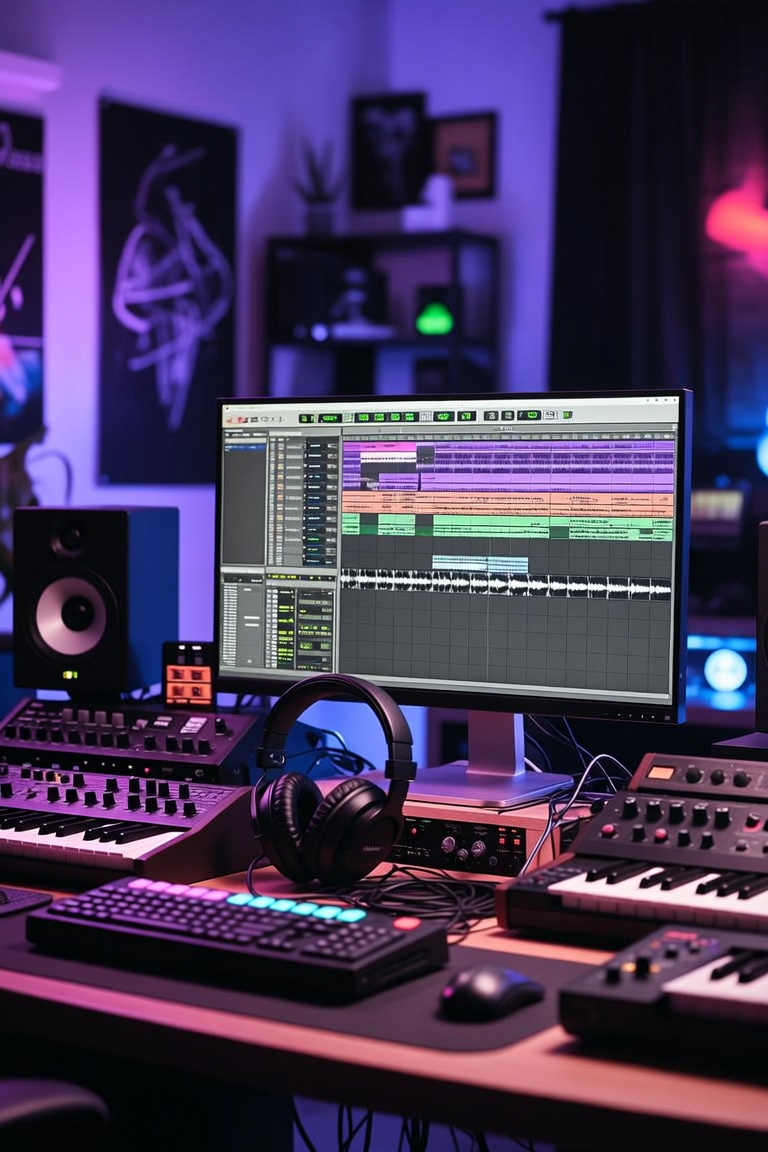
EDM production is one of the most exciting areas of modern music production. It combines rhythm, sound design, arrangement, energy, emotion and technical control. A powerful EDM track can move a festival crowd, create emotion in a breakdown and bring massive impact when the drop arrives.
But producing electronic dance music is not only about making a loud drop. A professional EDM track needs structure. It needs groove, tension, release, transitions, strong drums, controlled low end, creative sound design and a mix that translates well on different sound systems.
That is why a structured EDM production course [LINK: https://themusicproducerschool.com/produto/ableton-live-12-edm-course/] can make such a big difference. Instead of collecting random tricks, presets and plugin chains, students learn how electronic music is built from the first idea to the final master.
At The Music Producer School [LINK: https://themusicproducerschool.com/], the focus is not only on teaching software. The goal is to help producers understand how to create music with intention. EDM is a genre where energy matters, but energy needs to be controlled. A great track is not just loud. It is balanced, emotional and arranged with purpose.
What Is EDM Production?
EDM production is the process of creating electronic dance music using a DAW, virtual instruments, samples, synthesizers, drum programming, audio effects and mixing tools. EDM can include many styles, such as house, techno, progressive house, future bass, trap, dubstep, trance, melodic techno, drum and bass and other electronic genres.
Even though these styles sound different, they share important production foundations. Most EDM tracks depend on strong rhythm, powerful low end, clear arrangement, memorable hooks, transitions and movement.
An EDM producer needs to understand how to create drums, basslines, synths, melodies, effects, buildups, drops and breakdowns. The producer also needs to understand how to mix these elements so the final track feels professional.
A good music production course [LINK: https://themusicproducerschool.com/courses/] should teach these foundations clearly. EDM is a creative style, but it also requires discipline. Without structure, a track can easily become repetitive, messy or unfinished.
Why EDM Production Is Different From Other Genres
EDM has a very specific relationship with energy. In many styles of music, the vocal or lyrics may be the main focus. In EDM, the arrangement itself often creates the emotional journey. The buildup creates expectation. The drop releases tension. The breakdown creates space. The transitions keep the listener moving.
This makes arrangement one of the most important parts of EDM production. The producer must know when to add energy, when to remove elements, when to create silence, when to introduce a new sound and when to make the track explode.
Another major difference is sound design. EDM producers often create or heavily shape their own sounds. Bass sounds, leads, plucks, pads, risers, impacts and effects are all part of the identity of the track.
Drums are also essential. A weak kick, weak clap or weak groove can make an EDM track feel amateur immediately. The drums need to hit with confidence, but they also need space in the mix.
EDM is also very connected to the club and festival environment. A track may sound interesting in headphones, but it also needs to work on large speakers. That means the low end, loudness, stereo image and mix balance need to be handled carefully.
The Problem With Learning EDM From Random Tutorials
Many beginners try to learn EDM production by watching random tutorials online. These videos can be useful, but they often teach isolated techniques. One video shows how to make a drop. Another shows a bass preset. Another explains sidechain compression. Another gives a mastering chain.
The problem is that these pieces do not always connect. A producer may learn how to create a cool synth sound but still not know how to arrange a full track. Another producer may learn how to make drums louder but still not understand groove. Another may copy a drop tutorial but not understand why the drop works.
A structured EDM production course solves this problem by teaching the full process. Students learn how to start with an idea, build sections, create tension, design sounds, arrange the track, mix the elements and prepare the final version.
This is important because EDM is not only about technique. It is about decisions. A producer needs to know why a sound is used, why a transition works, why the drop feels powerful and why the mix sounds balanced.
Choosing the Right DAW for EDM Production
EDM can be produced in many DAWs, including Ableton Live, Logic Pro, FL Studio, Studio One, Pro Tools and Fender Studio Pro. The DAW is important, but it is not the only thing that matters.
Ableton Live is especially popular for electronic music because of its fast workflow, Session View, audio warping, MIDI tools, effects and creative routing. It is excellent for building loops, testing arrangements, manipulating samples and creating electronic textures.
For producers who want a workflow focused on electronic music, the Ableton Live course [LINK: https://themusicproducerschool.com/produto/ableton-live-12-edm-course/] can be a strong path. Ableton makes it easy to experiment quickly and turn ideas into full arrangements.
Logic Pro is also a powerful option for EDM, especially for producers who like a more traditional studio-style workflow with strong MIDI tools, recording features and built-in instruments. Producers who want a broader production foundation can explore the online music production course [LINK: https://themusicproducerschool.com/produto/online-music-production-course/].
The truth is simple: professional EDM can be made in many DAWs. The most important thing is learning the process behind the music.
Building Strong EDM Drums
Drums are the foundation of most EDM tracks. The kick, clap, snare, hi-hats, percussion and groove define the movement of the song.
The kick is especially important. In many EDM styles, the kick drives the entire track. It needs to have the right punch, weight and relationship with the bass. A weak kick can make the drop feel small. A kick that is too heavy or uncontrolled can destroy the mix.
Claps and snares help define the rhythm and impact. Hi-hats and percussion create movement. Small rhythmic details can make a groove feel more alive and less robotic.
A good EDM production course should teach students how to choose drum sounds, layer drums, program grooves, adjust velocity, create swing and build energy through percussion.
Drums are not only about loudness. They are about feel. A professional groove makes the listener move naturally. Even in electronic music, rhythm needs emotion.
Kick and Bass: The Low End Relationship
The relationship between kick and bass is one of the most important parts of EDM production. If the kick and bass fight each other, the track will feel muddy and weak. If they work together, the track can feel powerful and clean.
The low end is difficult because it takes up a lot of energy in the mix. The kick usually provides impact, while the bass provides movement, weight and harmonic foundation. These two elements need to be arranged and mixed carefully.
Sidechain compression is often used in EDM to create space between the kick and bass. When the kick hits, the bass ducks slightly, allowing the kick to cut through. This creates the pumping effect that is common in many dance music styles.
But sidechain is not a magic solution. The producer still needs to choose the right kick, design the right bass, tune the low end and make sure the rhythm works musically.
A strong EDM production workflow teaches low end control from the beginning. It is much easier to create a clean mix when the kick and bass are chosen and arranged correctly.
Sound Design for EDM
Sound design is a huge part of electronic music. It is one of the things that gives an EDM track its identity.
Synth leads, basses, plucks, pads, risers, impacts, atmospheres and effects can all be created or shaped with sound design. Producers use synthesizers, samplers, effects, modulation, filters, envelopes, LFOs, distortion, reverb and delay to create movement and character.
But sound design should always serve the track. A sound can be impressive by itself and still not work in the arrangement. The real question is not “Is this sound cool?” The real question is “Does this sound help the track?”
A bass sound should support the groove. A lead sound should create identity. A pad should add emotion or space. A riser should build tension. An impact should make a transition feel stronger.
In a professional EDM production course, sound design should be taught in context. Students need to learn how to design sounds that fit the genre, the arrangement and the mix.
Creating Melodies and Hooks
EDM is often remembered through hooks. A hook can be a vocal chop, a synth melody, a bass riff, a chord progression or a rhythmic idea. The hook gives the track identity.
Many beginners focus too much on sound design and forget musical ideas. A massive synth sound is not enough if the melody is weak. A loud drop is not enough if the hook is not memorable.
A strong EDM melody does not always need to be complicated. Sometimes a simple idea with the right rhythm, sound and repetition is more effective than a complex melody.
Chords also matter. Chord progressions create emotion and direction. In progressive house, future bass and melodic EDM, harmony can be one of the most important parts of the track. In darker styles like techno or bass music, harmony may be simpler, but atmosphere and tension become more important.
An EDM production course should help producers understand how musical ideas support energy. The goal is not just to make noise. The goal is to create a track people remember.
Arrangement: The Secret Behind Powerful EDM Tracks
Arrangement is where an EDM track becomes a journey. Without arrangement, a track is only a loop.
A typical EDM arrangement may include an intro, groove section, buildup, drop, breakdown, second buildup, second drop and outro. But this structure changes depending on the style. House may have longer grooves. Future bass may have emotional breakdowns. Techno may develop slowly with subtle changes. Trap EDM may use more dramatic beat switches.
The arrangement controls the listener’s expectation. The buildup tells the listener that something is coming. The drop delivers the energy. The breakdown gives space. The transitions connect the sections.
A good arrangement also creates contrast. If everything is loud all the time, nothing feels powerful. The drop feels bigger when the buildup creates tension. The breakdown feels emotional when the drums disappear. The final drop feels stronger when new elements are added.
This is one of the biggest reasons producers should study EDM production with structure. Arrangement is not random. It is the architecture of the track.
Buildups, Drops and Transitions
Buildups, drops and transitions are central to EDM production. They are the moments that create excitement and movement.
A buildup usually increases tension. This can be done with snare rolls, rising synths, automation, pitch movement, filtered drums, vocal chops, noise risers and increasing rhythmic activity.
The drop is the release. It needs to feel powerful because the track has prepared the listener for that moment. A drop can be aggressive, emotional, groovy, minimal or melodic, depending on the genre.
Transitions connect sections. They can be created with impacts, fills, reverse sounds, sweeps, delay throws, reverb tails, drum fills, automation and silence. Sometimes removing sound right before a drop can be more powerful than adding more layers.
A professional EDM production course should teach how to build these moments with intention. The goal is not to use every effect possible. The goal is to make the track move naturally.
Using Automation to Create Movement
Automation is one of the most important tools in EDM production. It allows sounds to change over time. Without automation, electronic music can feel static and repetitive.
Automation can control volume, filter cutoff, reverb, delay, panning, distortion, pitch, effects, synth parameters and many other elements. It can make a sound grow, disappear, open up, become darker, become wider or create tension.
For example, a filter can slowly open during a buildup. Reverb can increase before a breakdown. Delay can appear only at the end of a vocal phrase. A bass can become more distorted in the second drop. A pad can widen during an emotional section.
These changes keep the listener engaged. In EDM, movement is essential. Even if the same loop repeats, automation can make it feel alive.
Using Samples and Loops Creatively
Samples and loops are common in EDM production. Drum loops, vocal chops, percussion, FX, one-shots and melodic loops can all be used creatively.
The important thing is to avoid using samples in a lazy way. A loop can be a starting point, but the producer should shape it. You can chop it, reverse it, pitch it, stretch it, layer it, process it or combine it with original ideas.
Sample packs can help producers move faster, especially when looking for drums, effects, textures or inspiration. At The Music Producer School, producers can explore sample packs and producer tools [LINK: https://themusicproducerschool.com/shop/] designed to support modern music production workflows.
The best producers use samples as raw material. They transform sounds until they become part of their own identity.
Mixing EDM Tracks
Mixing EDM requires clarity, impact and control. The mix needs to sound powerful without becoming harsh, muddy or distorted.
The first step is volume balance. The kick, bass, drums, synths, vocals and effects need to sit in the right place. Before using complex plugin chains, the basic balance should already feel strong.
EQ helps create space. Compression can control dynamics. Saturation can add warmth and character. Reverb and delay create depth. Stereo image can make synths and effects feel wider. Limiting and mastering prepare the final loudness.
The low end needs special attention. EDM often depends on powerful bass, but too much low end can make the mix unclear. The kick and bass should support each other, not compete.
The high end also matters. Hi-hats, synths and effects can add excitement, but they can also become harsh if not controlled.
A good EDM mix should feel energetic, clean and balanced across different systems.
Mastering EDM for Streaming and Clubs
Mastering is the final stage before release. In EDM, mastering often needs to achieve competitive loudness while keeping the track clear and punchy.
But loudness should not destroy the music. Pushing a limiter too hard can reduce dynamics, create distortion and make the track tiring to hear. A good master should feel controlled, not crushed.
EDM mastering should preserve the impact of the kick, the power of the bass, the clarity of the highs and the emotion of the arrangement. It should also help the track translate on headphones, phone speakers, car speakers, studio monitors and larger systems.
A professional workflow teaches producers to prepare the mix before mastering. If the mix is balanced, the master becomes much easier.
EDM Production for Beginners
EDM can be exciting for beginners because the results can appear quickly. You can create drums, add a bassline, use a synth and build a loop in a short time. But finishing a professional track takes more practice.
Beginners should start with the basics. Learn your DAW. Understand tempo. Build simple drum grooves. Create basslines. Learn basic chords and melodies. Practice arrangement. Learn EQ, compression, reverb and automation.
Do not try to learn everything at once. EDM production has many layers. The best approach is to build one skill at a time.
A structured EDM production course [LINK: https://themusicproducerschool.com/produto/ableton-live-12-edm-course/] helps beginners avoid confusion. It gives a clear path and helps students understand what matters most at each stage.
EDM Production for Intermediate Producers
Intermediate producers often already know how to create loops and basic arrangements, but they struggle with finishing tracks, making drops hit harder, improving sound design or achieving a professional mix.
At this stage, the challenge is not starting music. The challenge is completing it at a higher level.
Intermediate producers need to focus on arrangement details, sound selection, low end control, mix balance, transitions, automation and reference tracks. They also need to develop better listening skills.
This is where feedback becomes very valuable. Sometimes a producer cannot hear what is wrong with their own track because they have listened to it too many times. A mentor or structured course can reveal problems much faster.
Can You Learn EDM Production Online?
Yes, EDM production can be learned online when the training is structured and practical. Online learning allows students to study from their own studio, repeat lessons, practice at their own pace and apply techniques directly inside their own DAW.
The key is choosing a course that teaches the full process. EDM production is not just one trick. It is the combination of musical ideas, sound design, arrangement, mixing and finishing.
An online music production course [LINK: https://themusicproducerschool.com/produto/online-music-production-course/] can also help students build a wider foundation beyond one genre. This is useful because many EDM producers also work with pop, trap, vocals, soundtrack, remixes and commercial music.
Online learning works best when the student practices consistently. Watching lessons is not enough. The real progress comes from creating music, finishing projects and applying what you learn.
Why Finishing Tracks Matters
Many EDM producers have hundreds of unfinished projects. They create drops, loops and ideas, but never finish complete songs. This is one of the most common problems in music production.
Finishing tracks is a skill. It requires decisions. You need to know when an idea is strong enough, when to simplify, when to add energy, when to stop adding layers and when to move to mixing.
A producer who finishes music learns faster than a producer who only starts ideas. Every finished track teaches something. Even if the track is not perfect, the process builds experience.
A good EDM production course should help students finish more music. The goal is not only to create exciting loops. The goal is to build complete tracks that can be released, shared or used professionally.
Learn EDM Production With a Professional Workflow
At The Music Producer School [LINK: https://themusicproducerschool.com/], EDM production is taught with a practical and professional mindset. Students learn how to create ideas, build grooves, design sounds, arrange tracks, mix elements and finish productions with more confidence.
The goal is not to copy another producer. The goal is to understand the process behind professional electronic music so you can develop your own sound.
Whether you want to produce house, techno, future bass, EDM, trap, melodic electronic music or festival-style tracks, the foundation is the same: rhythm, energy, arrangement, sound design, mixing and finishing.
For more articles about DAWs, production techniques, mixing, mastering and creative workflow, visit the music production blog [LINK: https://themusicproducerschool.com/blog/].
If you want to improve your electronic music workflow and start creating stronger tracks, the EDM production course [LINK: https://themusicproducerschool.com/produto/ableton-live-12-edm-course/] is a powerful way to build your skills.
And if you are not sure which course is right for your current level, you can contact The Music Producer School [LINK: https://themusicproducerschool.com/contact/] and discover the best path for your music production journey.