
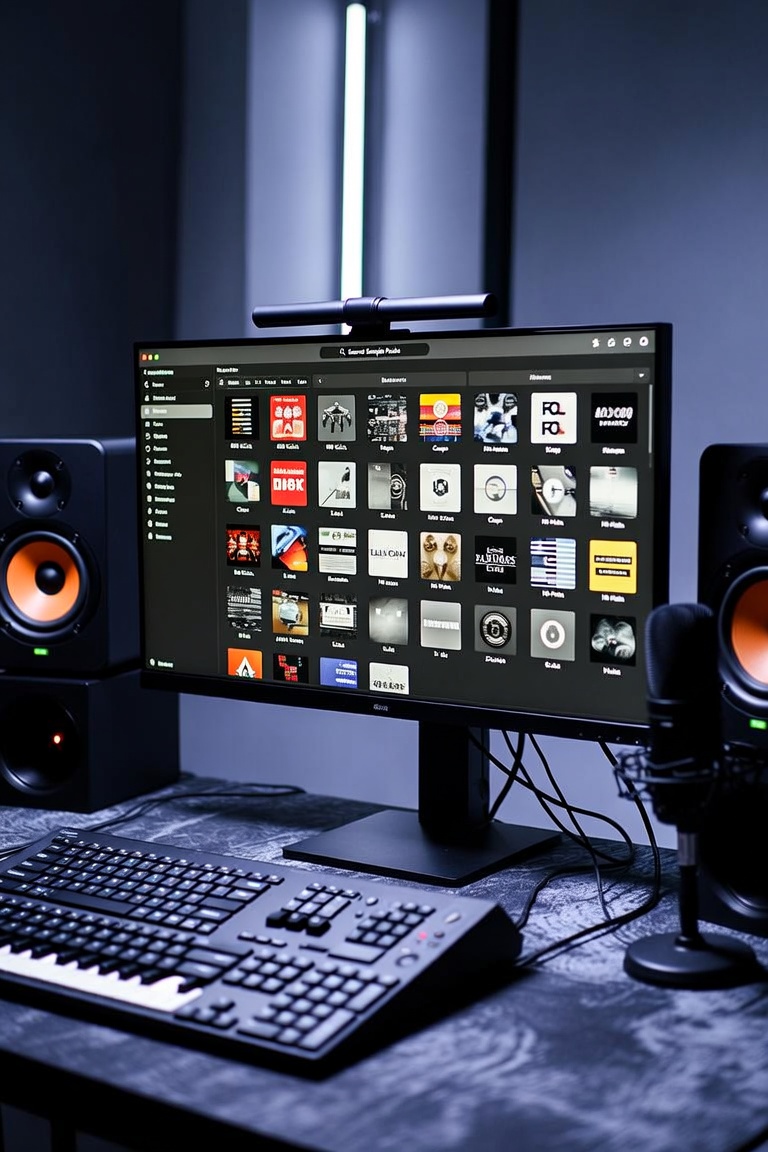
Sample packs for music production are one of the most useful tools for modern producers. They can speed up the creative process, inspire new ideas and help producers build tracks with better drums, loops, textures, vocals, effects and musical elements.
But using sample packs correctly is a skill. A sample pack is not a shortcut that replaces creativity. It is a creative toolbox. The producer still needs to choose the right sounds, edit them, arrange them, mix them and transform them into something original.
At The Music Producer School [LINK: https://themusicproducerschool.com/], the goal is to help producers understand not only which tools to use, but how to use them with intention. Sample packs can be powerful, but the real difference comes from the decisions behind the music.
If you want to explore sounds for EDM, trap, afro house, reggae, lo-fi, cinematic music or modern production, you can visit the sample packs and producer tools page [LINK: https://themusicproducerschool.com/shop/] and find creative material to support your workflow.
What Are Sample Packs?
Sample packs are collections of audio files created for music production. They can include drum loops, one-shots, bass loops, melody loops, vocal phrases, effects, textures, percussion, synth sounds, guitar loops, piano loops, risers, impacts and many other types of sounds.
Producers use sample packs inside DAWs such as Ableton Live, Logic Pro, FL Studio, Pro Tools, Studio One and Fender Studio Pro. These sounds can be dragged into a session, chopped, edited, pitched, processed and arranged into a complete track.
Some sample packs are genre-specific. For example, an afro house sample pack may include percussion loops, melodic elements, basslines and organic textures. A trap sample pack may include 808s, drum one-shots, hi-hat loops and dark melodies. A lo-fi sample pack may include dusty drums, vinyl textures, soft keys and mellow loops.
Other sample packs are more general and can be used across many styles.
The best sample packs give producers high-quality starting points without limiting creativity.
Why Sample Packs Are Useful for Producers
Sample packs are useful because they help producers create faster. Instead of building every sound from zero, you can start with strong material and focus on arrangement, emotion and production decisions.
This is especially helpful when inspiration is low. A drum loop, vocal chop or texture can spark a new idea in seconds. Sometimes one sound is enough to start a complete track.
Sample packs also help with sound selection. Beginners often struggle because their sounds are weak. The kick does not hit. The snare feels thin. The percussion lacks groove. The melody sounds cheap. A good sample pack can immediately improve the quality of the raw material.
But the producer still needs taste. Not every sound belongs in every track. Choosing the right sample is part of the art.
A structured music production course [LINK: https://themusicproducerschool.com/courses/] can help producers understand how to use samples in a professional workflow instead of randomly adding loops without direction.
Sample Packs Do Not Replace Creativity
One of the biggest misunderstandings about sample packs is the idea that using samples is not creative. This is not true. Many professional producers use samples, loops and sound libraries. What matters is how they use them.
A beginner may drag a loop into a session and leave it unchanged. A more creative producer may chop the loop, pitch it, reverse it, stretch it, layer it, process it with effects and build a completely new idea around it.
The sample is only the starting point. The producer creates the final identity.
Using a sample pack creatively means asking questions. What can I remove? What can I change? Can I turn this vocal into a chop? Can I use only one note from this melody? Can I layer this percussion with my own drums? Can I reverse this texture and use it as a transition?
Creativity is not about avoiding tools. Creativity is about making personal decisions with the tools you have.
Drum Loops and One-Shots
Drums are one of the most common parts of sample packs. A drum loop can give a track instant groove, while one-shots allow producers to build custom patterns.
Drum loops are useful for inspiration. They can provide rhythm, swing, percussion movement and energy. But relying only on full loops can make tracks sound generic. A better approach is to use loops as a foundation and then customize them.
You can chop a drum loop, remove certain hits, layer new kicks and snares, change the groove, add percussion or process the loop with EQ, compression and saturation.
One-shots give more control. With kicks, snares, claps, hi-hats and percussion hits, you can program your own patterns from scratch. This is especially important in trap, hip hop, EDM and pop production.
A strong drum workflow often combines both approaches. Use loops for feel and one-shots for control.
Melody Loops
Melody loops can include piano, guitar, synths, strings, brass, flutes, bells, vocals or other musical phrases. They are useful because they can quickly create mood and direction.
A melody loop can inspire a beat, chorus, intro, breakdown or full song. But melody loops should be used carefully because they often define the identity of the track.
To make a melody loop more original, producers can change the pitch, tempo, arrangement, effects and structure. You can chop small sections, reverse the audio, layer it with another instrument, filter it, resample it or use only one part of the loop.
A melody loop can also be used as a background texture instead of the main hook. Lowering the volume, adding reverb or filtering the high end can make it sit behind the main elements.
The goal is to make the loop serve the track, not control the entire track.
Vocal Samples and Vocal Chops
Vocal samples are extremely powerful in modern music production. They can be used as hooks, textures, transitions, background layers or emotional moments.
In EDM, vocal chops often become the main hook of the drop. In trap and hip hop, vocal textures can create atmosphere. In pop, vocal phrases can add emotion and movement. In afro house, organic vocals can bring human energy and identity.
Vocal samples can be chopped, tuned, stretched, reversed, layered and processed with reverb, delay, distortion or modulation. A simple vocal phrase can become a completely new instrument.
The key is making the vocal fit the key, rhythm and emotion of the track. If the vocal sample feels disconnected, it can distract the listener. If it is placed correctly, it can make the production feel more memorable.
FX, Risers and Impacts
FX sounds are important for transitions and energy. These include risers, impacts, sweeps, downlifters, noise effects, reverse sounds, crashes and atmospheric textures.
Many beginner tracks feel flat because the sections change suddenly with no transition. FX sounds help connect parts of the arrangement. They tell the listener that something is changing.
A riser can build tension before a drop. An impact can make a chorus feel bigger. A reverse effect can pull the listener into the next section. A sweep can smooth the transition between two parts.
But FX should not be overused. Too many risers and impacts can make the track feel crowded or amateur. The best effects support the arrangement without becoming distracting.
Using Sample Packs in EDM
EDM producers use sample packs for drums, bass loops, vocal chops, synth loops, risers, impacts and textures. Since EDM depends heavily on energy and sound design, sample packs can be extremely useful.
A strong kick, clean clap, wide riser or unique vocal chop can immediately improve an EDM production. But the producer still needs to create arrangement, movement and contrast.
If you are producing EDM in Ableton Live, the Ableton Live course [LINK: https://themusicproducerschool.com/produto/ableton-live-12-edm-course/] can help you understand how to use loops, automation, Session View, Arrangement View and effects with a professional workflow.
EDM is not only about loudness. It is about tension, release and movement. Samples can help, but the arrangement makes the track work.
Using Sample Packs in Trap and Hip Hop
Trap and hip hop producers often use sample packs for drum kits, 808s, hi-hats, melody loops, vocal textures and effects.
A good trap sample pack can help producers find hard drums and strong low-end sounds faster. But the producer still needs to create bounce. The 808 needs to be tuned. The drums need groove. The arrangement needs space for vocals.
Melody loops can be useful, but they should not overcrowd the beat. Trap production often works best when there is room for the artist. A beat can sound impressive alone but become too busy when vocals are added.
The producer’s job is to make the sample support the song.
Using Sample Packs in Afro House and Organic Music
Afro house and organic electronic music often use percussion, vocals, guitars, keys, melodic percussion and atmospheric textures. Sample packs can be very helpful in these styles because rhythm and organic feel are so important.
Percussion loops can create movement. Guitar loops can add human feel. Vocal textures can create identity. Drum loops can support the groove. Synth and pad loops can add atmosphere.
The challenge is making the track feel alive without becoming crowded. Afro house depends on groove, repetition and subtle changes. Small variations in percussion, filters and arrangement can make the production feel more natural.
A good sample pack can provide strong raw material, but the producer needs arrangement and mixing skills to make everything work together.
How to Make Samples Sound Original
There are many ways to make samples sound original.
You can chop the sample into smaller pieces and rearrange it. You can pitch it up or down. You can reverse it. You can time-stretch it. You can add reverb, delay, distortion, filtering or modulation. You can layer it with other sounds. You can resample it and process it again.
You can also use only a small part of a sample. Sometimes one chord, one vocal syllable, one drum hit or one texture is enough to inspire a full track.
Another creative technique is to change the context. A reggae guitar loop can become part of a lo-fi beat. A vocal texture can become an EDM riser. A percussion loop can become a rhythmic layer in a cinematic cue.
The more you transform the sample, the more it becomes part of your own sound.
Organizing Your Sample Library
A good sample library saves time. A messy sample folder slows down creativity.
Producers should organize samples by category, genre, tempo, key or type. For example, you can create folders for drums, kicks, snares, hi-hats, percussion, vocals, bass, melodies, FX, textures and loops.
You can also create a favorites folder for sounds you use often. This helps you start ideas faster.
Naming is important. If your files are impossible to understand, you waste time searching. Good organization helps you stay creative.
A professional workflow includes file management. Music production is not only about inspiration. It is also about building systems that help you finish music.
Mixing Samples in a Track
Samples still need to be mixed. Even high-quality sounds may need adjustment to fit your specific track.
A drum loop may need EQ to remove unnecessary low end. A melody loop may need filtering to leave space for vocals. A vocal sample may need tuning, reverb or compression. A percussion loop may need volume automation.
The goal is not to process every sample heavily. The goal is to make each sound fit the mix.
Volume balance is always the first step. Before adding plugins, make sure the sample is at the right level. Then use EQ, compression, reverb, delay or saturation only when needed.
Samples should feel like part of the production, not pasted on top of it.
Royalty-Free Sample Packs
Many sample packs are royalty-free, which means producers can use the sounds in their own music without paying extra royalties to the sample creator. This is important for producers who want to release tracks commercially.
However, producers should always check the license of each sample pack. Different creators may have different rules. Some allow commercial use. Some may have restrictions. Some may not allow redistribution of the raw samples.
When buying or downloading sample packs, always read the terms. This helps avoid problems later when releasing music.
A professional producer treats licensing seriously. Creativity and business need to work together.
Sample Packs and Music Production Workflow
Sample packs can make workflow faster, but they should be part of a larger process.
A strong workflow might begin with choosing a sample or sound, building a core loop, creating a rough arrangement, adding transitions, editing the session, mixing the elements and exporting the final track.
The sample pack helps at the creative stage, but the producer still needs to finish the music.
This is why education matters. A producer with good samples but no workflow may still create unfinished ideas. A producer with strong workflow can turn simple sounds into complete tracks.
For more guides about production workflow, DAWs, mixing, mastering and creative process, visit the music production blog [LINK: https://themusicproducerschool.com/blog/].
Common Mistakes When Using Sample Packs
One common mistake is using too many loops at once. This can make a track sound crowded and disconnected.
Another mistake is not changing the sample at all. If the sample is too recognizable or too generic, the track may not feel original.
A third mistake is ignoring key and tempo. A melodic sample that is out of key can make the whole track feel wrong. A loop that is stretched poorly can sound unnatural.
Many beginners also forget to mix the samples. Even good sounds need to fit the track.
The biggest mistake is thinking the sample pack will do all the work. Sample packs are tools. The producer still needs taste, arrangement, mixing and creativity.
Are Sample Packs Worth It?
Yes, sample packs are worth it when they help you create faster and improve the quality of your raw material. A good sample pack can inspire ideas, improve sound selection and support your workflow.
But sample packs are not magic. They work best when combined with skill. You need to know how to choose sounds, edit them, arrange them and mix them.
For beginners, sample packs can help reduce frustration. For intermediate producers, they can speed up workflow. For advanced producers, they can provide unique textures and creative starting points.
The value of a sample pack depends on how you use it.
Learn to Use Sample Packs Like a Producer
Sample packs for music production can be powerful when used creatively. They can help you build tracks faster, discover new sounds and improve your production workflow.
At The Music Producer School [LINK: https://themusicproducerschool.com/], producers learn how to use tools with intention. The goal is not only to collect sounds, but to turn those sounds into finished music.
If you want to explore drums, loops, vocals, textures and creative sounds for your productions, visit the sample packs and producer tools page [LINK: https://themusicproducerschool.com/shop/].
And if you want to learn how to turn samples, loops and ideas into complete professional tracks, the online music production course [LINK: https://themusicproducerschool.com/produto/online-music-production-course/] can help you build the workflow, arrangement and mixing skills needed to finish music with confidence.
If you are not sure which course or product is best for your goals, you can contact The Music Producer School [LINK: https://themusicproducerschool.com/contact/] and find the best path for your music production journey.