
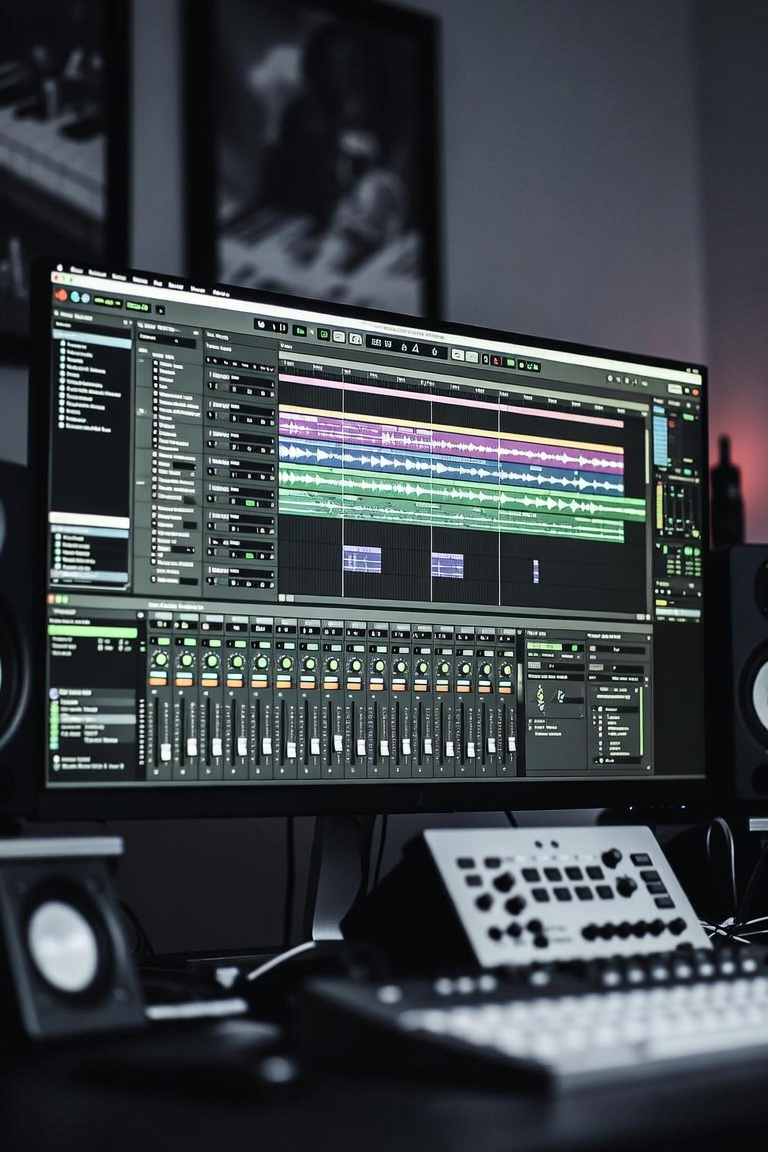
Choosing the best DAW for music production is one of the first big decisions every producer makes. A DAW, or Digital Audio Workstation, is the software where you record, edit, arrange, mix and export your music. It is the center of the modern studio.
But the truth is simple: there is no single perfect DAW for everyone. The best DAW depends on your music style, workflow, goals, budget, computer and creative personality. A producer making EDM may prefer a different workflow than someone recording vocals, mixing bands or composing soundtracks.
At The Music Producer School [LINK: https://themusicproducerschool.com/], students learn that the DAW is only the tool. The real difference comes from understanding music production. Sound selection, arrangement, rhythm, mixing, mastering and workflow matter more than the logo on the screen.
Still, choosing the right DAW can make your journey easier. The right software can help you create faster, stay organized and finish more tracks.
What Is a DAW?
A DAW is a Digital Audio Workstation. It is the software producers use to create music on a computer. Inside a DAW, you can record vocals, program drums, write MIDI parts, edit audio, use plugins, arrange full songs, mix tracks and export final masters.
Popular DAWs include Ableton Live, Logic Pro, FL Studio, Pro Tools, Studio One and Fender Studio Pro. Each one can produce professional music, but each one has a different workflow.
Some DAWs are better for electronic music. Some are better for recording. Some are better for beat making. Some are better for mixing and post-production. But none of them will automatically make your music sound professional.
A DAW gives you tools. Your decisions create the music.
That is why a structured music production course [LINK: https://themusicproducerschool.com/courses/] is so important. Learning the software is only the beginning. You also need to understand how to build a track from the first idea to the final export.
Why Choosing the Right DAW Matters
Choosing the right DAW matters because workflow affects creativity. If the software feels natural, you can create faster. If it feels confusing, you may spend more time fighting the program than making music.
A good DAW should help you start ideas quickly, organize sessions, edit smoothly, use effects easily and finish music with confidence.
For beginners, the wrong DAW can feel intimidating. Too many windows, menus and routing options can slow down the learning process. For advanced producers, the wrong DAW may limit speed, performance or creative flow.
But many producers make one big mistake: they keep switching DAWs instead of learning one deeply. They think a different program will solve every problem. In reality, unfinished tracks, weak mixes and poor arrangements usually come from lack of process, not lack of software.
The best DAW for music production is the one that helps you finish music consistently.
Ableton Live
Ableton Live is one of the most popular DAWs for electronic music production, EDM, live performance, beat making and creative sound design. It is known for speed, flexibility and a unique workflow built around Session View and Arrangement View.
Session View allows producers to test loops, clips, grooves and ideas without building a full timeline immediately. This is perfect for experimenting. Arrangement View is where those ideas become a complete track.
Ableton Live is especially strong for EDM, house, techno, trap, hip hop, sample-based music, remixes and live sets. It is also excellent for producers who like to manipulate audio, chop samples, automate effects and build creative textures.
The biggest advantage of Ableton is speed. You can create ideas quickly and test different combinations without stopping the creative flow.
The challenge is that beginners can get stuck in loops. They may create strong eight-bar ideas but never finish full songs. That is why learning arrangement is essential.
For producers focused on electronic music, the Ableton Live course [LINK: https://themusicproducerschool.com/produto/ableton-live-12-edm-course/] can be a strong path to develop workflow, arrangement, sound design and mixing skills.
Logic Pro
Logic Pro is one of the most complete DAWs for music production, recording, songwriting, MIDI programming and mixing. It is especially popular among producers who want a full studio environment inside one program.
Logic Pro is strong for recording vocals, guitars, keyboards and live instruments. It also includes powerful MIDI tools, virtual instruments, audio editing features, mixing plugins and arrangement options.
This makes Logic Pro a great choice for pop, EDM, hip hop, R&B, rock, cinematic music, acoustic music and full song production. It is especially useful for producers who want to record and produce complete songs from start to finish.
One of the biggest advantages of Logic Pro is value. It includes many instruments, effects and production tools without requiring a huge plugin collection.
The challenge is that Logic has many features, so beginners may feel overwhelmed at first. The best approach is learning the core workflow first: tracks, regions, recording, MIDI, editing, arrangement, mixing and export.
For producers who want a broader foundation in production, recording, mixing and mastering, the online music production course [LINK: https://themusicproducerschool.com/produto/online-music-production-course/] can help build a complete workflow.
FL Studio
FL Studio is one of the most popular DAWs for beat making, trap, hip hop, EDM and loop-based production. It is known for its fast pattern workflow, piano roll and easy drum programming.
Many producers love FL Studio because it feels quick for creating beats. The step sequencer makes drum programming simple, and the piano roll is considered one of the best in the industry.
FL Studio is especially popular among trap producers, hip hop beatmakers and electronic producers who like working with patterns. It is great for quickly building drums, 808s, melodies and loops.
The challenge is arrangement and mixing workflow. Some beginners create many patterns but struggle to organize them into full songs. Others may need time to understand routing and mixer structure.
FL Studio can absolutely create professional music. The key is learning how to move from loops to complete arrangements and how to mix with intention.
Pro Tools
Pro Tools is one of the most respected DAWs in professional recording studios, mixing rooms and post-production environments. It is widely used for recording, editing, mixing, film audio, vocal production and professional audio workflows.
Pro Tools is especially strong for audio editing. Engineers use it for recording bands, editing vocals, mixing songs, working with dialogue and handling large audio sessions.
For producers who want to work in professional studios, learn audio engineering or collaborate with recording engineers, Pro Tools can be a valuable DAW to understand.
The challenge is that Pro Tools may feel less immediate for beat making and electronic music compared to Ableton Live or FL Studio. It is not impossible to produce electronic music in Pro Tools, but its biggest strength is professional audio recording, editing and mixing.
Pro Tools is a great choice for people who care deeply about recording quality, editing precision and studio workflow.
Studio One and Fender Studio Pro
Studio One is a modern DAW known for its clean workflow, drag-and-drop features, recording tools and mixing environment. It is flexible enough for music production, recording, editing and mastering.
Many producers like Studio One because it feels modern and organized. It has strong audio editing, good mixing tools and a workflow that can work for many genres.
Fender Studio Pro can also be part of a modern production setup depending on the producer’s needs, especially for musicians who want a streamlined creative environment.
These DAWs may not always get the same attention as Ableton, Logic, FL Studio or Pro Tools, but they can still be powerful tools. The most important thing is whether the DAW helps you create and finish music.
A good producer can make professional music in many different programs because the foundation is not the software. The foundation is skill.
Best DAW for Beginners
The best DAW for beginners is the one that feels clear enough to learn and powerful enough to grow with you.
Ableton Live is great for beginners who want to produce electronic music, EDM, beats and sample-based tracks. Logic Pro is great for beginners who want a complete studio workflow for recording, songwriting and mixing. FL Studio is great for beginners who want to make beats quickly. Pro Tools is better for beginners focused on recording and audio engineering.
But beginners should not spend too much time searching for the perfect DAW. The best move is to choose one, learn the basics and start finishing music.
A beginner should focus on simple skills first: creating tracks, recording audio, programming MIDI, building drums, arranging sections, using basic EQ and compression, and exporting the final song.
Once those skills are strong, switching DAWs becomes easier because the core music production knowledge transfers.
Best DAW for EDM
For EDM production, Ableton Live is one of the strongest options. Its workflow is fast, creative and ideal for loops, drops, buildups, automation and sound design.
EDM producers often need to create energy quickly. Ableton makes it easy to experiment with drums, basslines, synths, vocal chops, risers, effects and arrangement ideas.
Session View is especially useful for testing sections before building the final track. Arrangement View then allows the producer to create the complete journey.
Logic Pro and FL Studio are also strong for EDM. Logic offers a complete production environment with excellent instruments and effects. FL Studio is fast for pattern-based electronic production.
But Ableton Live remains one of the most popular choices for producers focused on electronic music. The Ableton Live course [LINK: https://themusicproducerschool.com/produto/ableton-live-12-edm-course/] is a strong option for students who want to build EDM tracks with a clear workflow.
Best DAW for Recording Vocals
For recording vocals, Logic Pro and Pro Tools are both excellent choices. Logic Pro is great for home studios, songwriters and producers who want to record, edit and mix vocals inside a complete creative environment. Pro Tools is widely used in professional studios and is especially strong for audio editing and recording workflows.
Ableton Live can also record vocals, especially for EDM, trap and electronic music. However, producers who focus heavily on vocal comping, recording and traditional studio workflow may prefer Logic or Pro Tools.
A good vocal recording depends on more than the DAW. Microphone choice, room sound, recording level, performance, editing and mixing all matter.
For vocal production, the producer needs to understand comping, tuning, timing, EQ, compression, de-essing, reverb, delay and automation.
The DAW captures the vocal. The producer shapes the final sound.
Best DAW for Beat Making
For beat making, FL Studio, Ableton Live and Logic Pro are all strong options.
FL Studio is very popular because its step sequencer and piano roll make drum programming and melody creation fast. Many trap and hip hop producers use FL Studio because the workflow feels immediate.
Ableton Live is powerful for sample manipulation, audio warping, drum racks, loops and creative arrangement. It is great for producers who want to experiment and move quickly.
Logic Pro is also strong for beat making, especially for producers who want MIDI instruments, recording tools and full song production in one place.
The best DAW for beat making depends on how you like to create. Some producers think in patterns. Others think in loops. Others think in full arrangements.
The most important part is learning drums, 808s, groove, sound selection and arrangement.
Best DAW for Mixing and Mastering
For mixing and mastering, many DAWs can deliver professional results. Logic Pro, Pro Tools, Studio One, Ableton Live and FL Studio all include mixing tools and support third-party plugins.
Pro Tools is often preferred in professional mixing studios because of its editing and audio workflow. Logic Pro is strong for producers who want to mix their own music inside the same project. Studio One has a modern mixing and mastering workflow. Ableton Live can also be used for mixing, especially in electronic music.
The DAW matters less than the mixing decisions. A professional mix depends on volume balance, EQ, compression, stereo image, reverb, delay, automation, gain staging and critical listening.
Mastering also depends on judgment. Loudness is not everything. A good master should sound balanced, controlled and ready for release.
A mixing and mastering course [LINK: https://themusicproducerschool.com/courses/] can help producers understand how to make these decisions in any DAW.
Should You Use More Than One DAW?
Some producers use more than one DAW. For example, they may create beats in FL Studio, arrange electronic tracks in Ableton Live, record vocals in Logic Pro and edit audio in Pro Tools.
This can be powerful, but it can also become confusing. Beginners should usually focus on one DAW first. Learning one program deeply is better than knowing five programs superficially.
Once you understand music production, using multiple DAWs becomes easier. You will understand what each tool is good for and when it makes sense to switch.
But the goal should always be finishing music, not collecting software.
What Matters More Than the DAW?
The most important music production skills are not tied to one DAW. They apply everywhere.
You need to understand rhythm. You need to know how drums and groove work. You need to understand sound selection. You need to know how to build arrangements. You need to understand frequency balance. You need to know how to use EQ, compression, reverb, delay and automation. You need to develop your ears.
You also need to finish music. This is one of the most important skills of all.
A producer who finishes tracks in a simple DAW will grow faster than a producer who owns every software but never completes anything.
The DAW is important, but the process is more important.
For more guides about DAWs, production, mixing, mastering and workflow, visit the music production blog [LINK: https://themusicproducerschool.com/blog/].
How to Choose the Best DAW for You
To choose the best DAW, start with your goal.
If you want to produce EDM and electronic music, Ableton Live is a strong choice. If you want to record, produce and mix full songs, Logic Pro is excellent. If you want to make trap and hip hop beats quickly, FL Studio may feel natural. If you want professional recording, editing and studio work, Pro Tools is a strong option. If you want a modern all-around workflow, Studio One can also be a good choice.
Then think about your computer. Logic Pro only works on Mac. Ableton, FL Studio, Pro Tools and Studio One work on multiple systems. Also think about your budget, plugin needs and learning style.
But once you choose, commit to learning the software properly. Do not quit too early because the first days feel difficult. Every DAW has a learning curve.
Is the Best DAW Really That Important?
The DAW is important, but it is not the reason a song becomes great. Great music comes from ideas, emotion, taste, workflow and decision-making.
A professional producer can make strong music in different DAWs because they understand the process. A beginner can have the most expensive software and still struggle if they do not understand arrangement, mixing and sound selection.
So instead of asking only “What is the best DAW for music production?”, the better question is: “Which DAW will help me learn consistently and finish music?”
That question leads to better results.
Learn Music Production With the Right Workflow
At The Music Producer School [LINK: https://themusicproducerschool.com/], students learn music production with a practical and professional workflow. The goal is not only to teach software, but to help producers understand how music is built.
Whether you use Ableton Live, Logic Pro, FL Studio, Pro Tools, Studio One or Fender Studio Pro, the foundation remains the same: create ideas, organize sessions, build arrangements, choose better sounds, mix clearly and finish music.
If you are still choosing your DAW or want to learn how to produce music with more confidence, the online music production course [LINK: https://themusicproducerschool.com/produto/online-music-production-course/] can help you build a strong foundation.
For electronic music producers, the Ableton Live course [LINK: https://themusicproducerschool.com/produto/ableton-live-12-edm-course/] is also a focused path for learning EDM workflow, sound design, arrangement and production techniques.
And if you are not sure which DAW or course is right for your goals, you can contact The Music Producer School [LINK: https://themusicproducerschool.com/contact/] and discover the best path for your music production journey.