
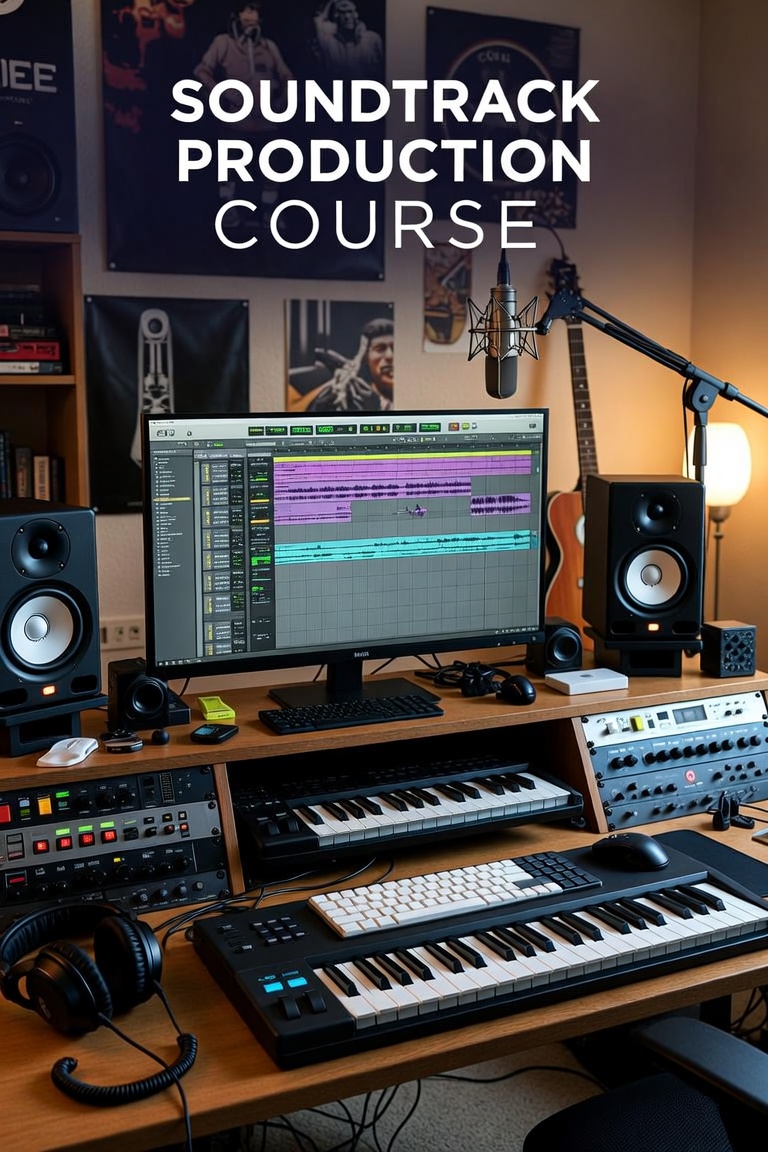
Soundtrack production is one of the most creative areas of modern music production. It is the art of creating music that supports emotion, story, tension, atmosphere and visual impact. Unlike a regular song, a soundtrack is not only made to be listened to by itself. It is made to serve a scene, a character, a brand, a game, a trailer, a documentary or a specific emotional moment.
A strong soundtrack can change the way an audience feels. It can make a scene feel more emotional, more intense, more mysterious, more dramatic or more powerful. Sometimes the music is big and cinematic. Other times it is simple, quiet and almost invisible. The most important thing is that the music supports the story.
That is why a structured soundtrack production course [LINK: https://themusicproducerschool.com/produto/online-music-production-course/] can help producers understand more than just chords, instruments and plugins. Soundtrack production requires musical sensitivity, technical workflow, arrangement skills, sound design, timing and emotional control.
At The Music Producer School [LINK: https://themusicproducerschool.com/], the goal is to help producers create music with intention. Whether you want to compose for film, games, trailers, YouTube, advertising, podcasts, documentaries or social media content, soundtrack production teaches you how to connect music with emotion and purpose.
What Is Soundtrack Production?
Soundtrack production is the process of creating music for visual media. This can include film scores, game music, trailer music, documentary music, advertising music, cinematic cues, background music and emotional themes for content.
Unlike traditional music production, where the song is usually the main focus, soundtrack production is often created to support something else. The music needs to follow the emotion of the scene, the rhythm of the edit, the personality of the project and the message behind the visuals.
A soundtrack producer needs to understand music composition, arrangement, sound design, DAW workflow, timing, dynamics, atmosphere and mixing. The producer also needs to understand when music should be present and when it should stay subtle.
A good soundtrack production course should teach students how to think beyond the loop. The goal is not just to create something that sounds beautiful. The goal is to create music that works with a story.
Why Soundtrack Production Is Different From Song Production
A regular song usually follows a structure such as verse, chorus, bridge and outro. It may focus on vocals, lyrics, hooks and replay value. A soundtrack works differently.
In soundtrack production, the music follows emotion and timing. A scene may need tension for ten seconds, silence for five seconds, a small emotional rise, and then a dramatic impact. The structure is often shaped by the picture, not by traditional song sections.
This makes soundtrack production more flexible, but also more demanding. The producer must pay attention to the visual moment. The music cannot fight the scene. It needs to support it.
For example, a dramatic scene may not need a huge orchestra. It may need a simple piano note, a soft texture or a subtle low drone. An action scene may need heavy percussion, fast strings and powerful impacts. A mysterious scene may need dark pads, reversed sounds and minimal movement.
The producer needs to ask: what does this moment need emotionally?
The Role of Emotion in Cinematic Music
Emotion is the center of soundtrack production. Every sound should help create a feeling.
Music can create sadness, hope, fear, tension, beauty, nostalgia, suspense, excitement or relief. Harmony, melody, rhythm, instrumentation, dynamics and sound design all affect emotion.
A minor chord progression can create darkness or sadness. A slow piano melody can create intimacy. Wide strings can create cinematic emotion. Deep percussion can create intensity. A soft pad can create atmosphere. Silence can create tension.
One of the biggest mistakes beginners make is adding too much music. They try to fill every moment with sound. But in soundtrack production, space is powerful. Sometimes the absence of music makes the next musical moment stronger.
A soundtrack production course helps students understand emotional control. The goal is not to impress with complexity. The goal is to support the feeling of the scene.
Music for Film
Film scoring is one of the most traditional forms of soundtrack production. In film, music helps guide the audience through the story. It can support characters, locations, emotional themes and dramatic moments.
A film score may include recurring themes. A character may have a melody that appears in different versions throughout the movie. A romantic theme may return in a sad version later. A villain theme may appear subtly before the character enters the scene.
Film music also needs to respect dialogue. If characters are speaking, the music must leave space. The mix, arrangement and instrumentation should not distract from the voice.
Timing is also essential. Music may need to hit specific moments in the scene, such as a cut, a reveal, a movement, a look or an emotional change. This is where composing to picture becomes important.
A professional music production course [LINK: https://themusicproducerschool.com/courses/] can help producers develop the foundation needed for film scoring, including arrangement, sound selection, mixing and DAW workflow.
Music for Games
Game music is different from film music because games are interactive. A movie plays the same way every time, but a game changes depending on the player.
This means game music often needs to loop, evolve and adapt. A calm exploration section may transition into combat music. A menu theme may need to repeat without becoming annoying. A boss fight may need energy, tension and intensity.
Game composers often create layers. For example, a basic music loop may play during exploration, then extra percussion, bass or synth layers may enter when the action increases. This approach helps the music respond to the player’s experience.
Game music can be orchestral, electronic, ambient, retro, cinematic, hybrid or experimental. The style depends on the game world.
A good soundtrack production course should introduce students to adaptive thinking. Even if you are not programming game audio, understanding how music can loop, transition and develop is very useful.
Trailer Music and Advertising
Trailer music and advertising music need to capture attention quickly. These formats are usually shorter and more intense than traditional film scoring.
Trailer music often uses dramatic structure. It may start with a soft intro, then build tension, add percussion, rise into a climax and finish with a powerful impact. The goal is to create excitement and anticipation.
Advertising music has a different challenge. It needs to support a brand message. The music may need to feel modern, emotional, luxury, friendly, energetic, inspiring or cinematic depending on the product.
In both cases, the producer needs to understand structure and timing. Every second matters. The music cannot take too long to develop. It needs to support the edit and strengthen the message.
Sound design is also important here. Risers, impacts, pulses, transitions, textures and cinematic effects can help connect visual cuts and create momentum.
For producers who use samples, loops and cinematic textures, sample packs and producer tools [LINK: https://themusicproducerschool.com/shop/] can help speed up the creative process.
Sound Design in Soundtrack Production
Sound design is a major part of modern soundtrack production. It helps create atmosphere, tension, realism and identity.
Sound design can include drones, impacts, risers, reverse sounds, textures, pulses, ambience, processed instruments, synthetic layers and experimental effects. These sounds can be musical, but they can also live between music and audio design.
For example, a horror scene may use low drones and unsettling textures. A sci-fi scene may use synthetic pulses and metallic effects. A dramatic trailer may use massive impacts and rising tension. A documentary may use soft atmospheric layers that support the narration.
Sound design helps the soundtrack feel connected to the visual world. It can make the music more immersive and unique.
A soundtrack production course should teach students how to use sound design with purpose. Random effects can make a track messy. Carefully chosen textures can make the scene feel alive.
Orchestral Instruments and Virtual Libraries
Many soundtrack producers use orchestral instruments such as strings, brass, woodwinds, piano, percussion and choir. These sounds can create emotion, drama and cinematic scale.
Today, producers can create orchestral arrangements inside a DAW using virtual instrument libraries. This makes soundtrack production more accessible than ever. You do not need a full orchestra to start composing cinematic music.
But orchestral production requires understanding. Strings, brass and woodwinds each have different roles, ranges and emotional qualities. A violin line feels different from a cello line. French horns create a different emotion than aggressive brass stabs. Soft piano can create intimacy, while large percussion can create power.
The goal is not to use every instrument at once. The goal is to choose the right color for the scene.
Virtual instruments can sound powerful, but they need expression. Velocity, modulation, dynamics, articulation and arrangement all help make virtual instruments feel more alive.
Hybrid Cinematic Music
Modern soundtrack production often combines orchestral instruments with electronic sounds. This is called hybrid cinematic music.
A hybrid soundtrack may include strings, brass and percussion combined with synth basses, drones, pulses, distorted textures and electronic effects. This style is common in trailers, games, action scenes, sci-fi, documentaries and modern film scoring.
Hybrid music is powerful because it combines emotion and impact. Orchestral instruments can bring drama and depth, while electronic sounds can bring modern energy and unique texture.
A producer working in this style needs to understand both musical arrangement and sound design. The challenge is making acoustic and electronic elements feel like they belong together.
This is where mixing becomes very important. Large percussion, low synths, brass, strings and effects can easily become crowded. The producer needs to create space and balance.
Composing to Picture
Composing to picture means creating music while watching the visual content. This is one of the most important skills in soundtrack production.
The music needs to support timing, movement and emotional changes. A scene may shift from calm to tense. A character may reveal something important. A camera movement may create a dramatic moment. The music should respond to these changes.
In a DAW, producers can import video and compose directly to the timeline. This allows them to place musical events at specific moments. These moments are often called hit points.
But hit points should be used carefully. If the music hits every visual action, it can become cartoonish. The producer needs to decide which moments deserve musical emphasis.
Composing to picture is about balance. The music should feel connected to the visuals without becoming too obvious.
Arrangement for Soundtracks
Arrangement in soundtrack production is different from arrangement in a pop song or EDM track. Instead of building sections for a chorus or drop, the producer builds emotional development.
A cue may start with a simple texture, introduce a melody, add harmony, build tension, reach a peak and then disappear. Another cue may stay minimal for the entire scene.
The arrangement depends on the purpose of the music. Is the scene building suspense? Is it creating sadness? Is it supporting dialogue? Is it showing victory? Is it creating fear?
A strong arrangement guides the listener emotionally without distracting from the visual.
This is why soundtrack production requires patience. The producer must know when to keep things simple and when to expand.
Melody and Theme Development
Themes are important in many soundtracks. A theme is a musical idea connected to a character, place, emotion or story.
A theme can be long and memorable, or short and subtle. It can appear in different forms throughout a project. For example, a hopeful theme may appear later in a darker version. A character theme may be played by piano in one scene and by strings in another.
Theme development helps create continuity. It makes the soundtrack feel connected instead of random.
A good soundtrack production course should teach students how to create simple themes and develop them in different emotional ways.
Melody does not need to be complex to be powerful. In soundtrack production, a small melodic idea can carry deep emotion when placed correctly.
Rhythm and Percussion
Percussion is often used in cinematic music to create energy, movement and impact. It can be subtle or massive.
Action scenes may use large drums, taikos, toms, hits and rhythmic pulses. Suspense scenes may use soft ticking, low pulses or minimal percussion. Game music may use percussion layers that evolve during gameplay.
Rhythm helps control pacing. A faster rhythm can increase tension. A slow pulse can create seriousness. Irregular rhythms can create anxiety.
But percussion should not overpower the scene. It needs to support the emotion and leave space for other elements.
In hybrid soundtrack production, percussion often works with synth pulses, bass movement and orchestral hits to create momentum.
Atmosphere and Texture
Atmosphere is one of the most powerful tools in soundtrack production. Not every moment needs a melody. Sometimes a texture is enough.
A texture can create place, mood and tension. It can be a pad, drone, field recording, processed instrument, noise layer or ambient sound. These elements can make a scene feel more immersive.
For example, a documentary may use soft textures under narration. A thriller may use dark drones to create tension. A sci-fi project may use synthetic atmospheres. A fantasy scene may use airy pads and delicate instruments.
Textures should be mixed carefully. They need to support the scene without becoming distracting.
Learning how to create atmosphere helps producers write music that feels deeper and more cinematic.
Mixing Soundtrack Music
Mixing soundtrack music requires balance, space and dynamics. Unlike some commercial music styles, soundtrack music does not always need to be loud all the time. Dynamics are part of the emotion.
A cinematic mix may have quiet sections and huge peaks. The producer needs to control frequency balance, depth, stereo image and clarity.
Orchestral instruments need space. Low percussion and bass need control. Sound design elements need placement. Reverb can create depth, but too much reverb can make the mix unclear.
If the music includes dialogue or narration, the mix must leave room for the voice. This is especially important in film, advertising, podcasts and documentaries.
A good mix supports the visual content. It should not fight the story.
Mastering for Media
Mastering soundtrack music depends on where the music will be used. Music for streaming, trailers, games, YouTube, film and advertising may require different final levels and formats.
The goal of mastering is to prepare the final audio so it translates well. It should sound balanced, controlled and ready for delivery.
For media work, it is important to avoid over-compressing. Soundtrack music often needs dynamics. If everything is too loud, emotional contrast disappears.
A producer should also understand exporting formats, stems and alternate versions. Clients may need full mix, no drums, no melody, underscore, stems or loopable versions.
A professional workflow makes delivery easier and more reliable.
DAWs for Soundtrack Production
Soundtrack music can be created in many DAWs, including Logic Pro, Ableton Live, Pro Tools, Studio One, FL Studio and Fender Studio Pro.
Logic Pro is popular for composition, MIDI programming, recording and cinematic arrangement. Ableton Live can be powerful for sound design, textures, electronic scoring and experimental music. Pro Tools is common in audio post-production and recording environments. Studio One and Fender Studio Pro can also support modern soundtrack workflows.
The DAW matters less than the producer’s understanding of timing, emotion and arrangement. A great soundtrack can be created in many different systems.
If you want a broader foundation in production, recording, arrangement, mixing and mastering, the online music production course [LINK: https://themusicproducerschool.com/produto/online-music-production-course/] can help build the skills needed for soundtrack work.
Soundtrack Production for Beginners
Beginners should start simple. You do not need to compose a huge orchestral score immediately. Start with a short scene, a simple emotion and a few instruments.
Choose one mood. Is the scene sad, tense, hopeful, mysterious or powerful? Then choose sounds that support that mood. A piano, pad, string section, drone or percussion loop may be enough to begin.
Practice creating short cues. Try writing 30 seconds of suspense, 30 seconds of sadness, 30 seconds of action and 30 seconds of hope. This builds emotional vocabulary.
Beginners should also study scenes from films, games and commercials. Listen to how music supports the picture. Notice when music enters, when it disappears and how it changes the feeling of the scene.
The more you listen, the better you understand soundtrack production.
Soundtrack Production for Intermediate Producers
Intermediate producers may already know how to use a DAW and create music, but soundtrack production requires a different mindset.
At this level, producers should focus on emotion, timing, orchestration, sound design, transitions and mixing for media. They should also practice composing to picture and creating alternate versions of a cue.
Intermediate producers should learn how to avoid overproducing. Sometimes fewer elements create a stronger emotional effect.
They should also work on organization. Soundtrack sessions can become large, especially with orchestral libraries and sound design layers. Clear track naming, templates, markers and routing are very useful.
A professional workflow helps creativity move faster.
Using Reference Tracks
Reference tracks are useful in soundtrack production. They help producers understand the tone, instrumentation, dynamics and mix style of a specific genre.
If you are writing trailer music, listen to trailer references. If you are writing emotional piano music, study emotional film cues. If you are creating game combat music, listen to game soundtracks with similar energy.
The goal is not to copy. The goal is to understand the language of the style.
Reference tracks can reveal how simple many effective soundtracks are. They can also show how arrangement and dynamics create emotion over time.
Building a Career With Soundtrack Production
Soundtrack production skills can be used in many professional areas. Producers can create music for films, short films, indie games, YouTube channels, commercials, podcasts, documentaries, trailers, social media campaigns and content creators.
The demand for music in media continues to grow because video content is everywhere. Brands, creators, filmmakers and developers all need music that supports their message.
A producer who understands soundtrack production can offer more than beats or songs. They can create emotional audio experiences for visual projects.
Building a portfolio is important. Producers should create examples of different moods and styles. A strong portfolio might include emotional piano, action cue, suspense cue, cinematic trailer, ambient texture, game loop and advertising music.
For more guides about music production, DAWs, mixing, mastering and creative workflow, visit the music production blog [LINK: https://themusicproducerschool.com/blog/].
Is a Soundtrack Production Course Worth It?
Yes, a soundtrack production course is worth it if you want to create music for media with a professional workflow. This type of production requires more than musical ideas. It requires timing, emotion, arrangement, sound design and delivery skills.
Free tutorials can teach isolated techniques, but a structured course helps you understand the complete process. It can help you move from random cinematic ideas to finished cues that support real visual projects.
Soundtrack production is also valuable because it expands your creative identity. You are not only making songs. You are creating music that tells stories.
Learn Soundtrack Production With a Professional Workflow
Soundtrack production is where music meets emotion, story and visual purpose. It is one of the most rewarding skills a producer can develop because it teaches you how to create music that serves a bigger experience.
At The Music Producer School [LINK: https://themusicproducerschool.com/], students learn music production with a practical and creative approach. The goal is to help producers understand workflow, sound selection, arrangement, mixing and emotional decision-making.
If you want to create music for film, games, trailers, advertising, documentaries or digital media, the soundtrack production course [LINK: https://themusicproducerschool.com/produto/online-music-production-course/] can help you build the foundation.
And if you are not sure which course is right for your goals, you can contact The Music Producer School [LINK: https://themusicproducerschool.com/contact/] and discover the best path for your music production journey.